Key Facts
- Robotic and laparoscopic incisions are typically just 5 to 12 millimeters, far smaller than the incisions used in open abdominal surgery.
- Surface skin usually closes within 7 to 14 days, but full scar maturation, meaning the tissue flattens and fades to your natural skin tone, takes 12 to 18 months.
- Incisions are closed internally with Monocryl, an absorbable suture, and externally with Steri-Strips. No stitches need to be removed in the office.
- Daily silicone gel or sheets for 8 to 12 weeks, started only after the skin is fully closed, is the step most surgeons recommend for minimizing visible scarring.
- Daily SPF 30+ for the first year is one of the simplest, most effective ways to prevent a healing scar from darkening permanently.
If you are preparing for, or recovering from, robotic or laparoscopic gynecologic surgery, reducing scarring comes down to a specific sequence: protect the incision while it seals, keep it out of the sun, and begin silicone therapy only once the skin underneath is fully closed. Each step matters, and doing them out of order, especially starting scar cream too early, can do more harm than good.
One of the real advantages of robotic and laparoscopic gynecologic surgery is the size of the incision itself. Because the openings are often just 5 to 12 millimeters, roughly the width of a pencil eraser or smaller, patients start from a much better cosmetic position than they would with an open procedure. But a small incision still needs to be cared for correctly to heal into a thin, flat, faded line rather than a raised or discolored one. This guide walks through exactly how your incisions are closed, what a normal healing timeline looks like, and the specific steps that make the biggest difference in how your scars ultimately look.
Why Robotic and Laparoscopic Incisions Scar Differently Than Open Surgery
The single biggest factor in how visible a surgical scar becomes is how much skin had to be cut in the first place. Traditional open gynecologic surgery uses one long incision, often 4 to 8 inches, to give the surgeon direct visibility and hand access to the pelvis. Robotic and laparoscopic surgery instead uses a handful of small ports, each just 5 to 12 millimeters, through which a camera and slender instruments are guided.
According to the American College of Obstetricians and Gynecologists (ACOG), the smaller incisions used in laparoscopic surgery allow for faster healing, smaller scars, and less postoperative pain than open abdominal surgery. That difference is the reason most patients who are candidates for minimally invasive gynecologic surgery end up with scars that are easy to conceal and, over time, easy to forget were ever there.
Smaller incisions do not mean zero scarring, however. Every incision through skin produces some scar tissue as the body rebuilds the area with collagen. What a small incision does give you is a significant head start, and the steps in this guide are designed to protect that advantage rather than undo it.
How Are My Incisions Closed After Surgery?
Understanding what is actually holding your incision together, and for how long, takes most of the guesswork out of aftercare. Two materials do the work: an internal suture and an external adhesive strip.
- Monocryl
- A soft, absorbable synthetic suture used to close the deeper layer of skin during surgery. It dissolves on its own under the skin over the course of several weeks. You will not feel it, see it, or need it removed.
- Steri-Strips
- Thin, skin-toned adhesive tape strips placed across the top of the incision to hold the skin edges flat and aligned while the surface forms a seal. They are not stitches, and no one needs to remove them for you in most cases.
Because the deep layer is already closed with Monocryl and the surface is protected by Steri-Strips, there is no suture-removal appointment for most robotic and laparoscopic incisions. In the first couple of weeks, it is completely normal for the incision to look slightly pink, raised, or firm to the touch. That firmness is collagen being laid down beneath the surface, which is a necessary part of healing, not a sign that something is wrong.
What Is the Normal Scar Healing Timeline?
Scar healing happens in two overlapping phases: the surface seals in one to two weeks, while the deeper tissue continues remodeling for well over a year. Scar maturation is the term for that second, longer phase, when a scar gradually flattens, softens, and fades from pink or red toward your natural skin tone.
| Timeframe | What's happening | What to do |
|---|---|---|
| Days 1–7 | Steri-Strips hold the skin edges aligned while Monocryl dissolves beneath the surface. | Keep strips clean and dry. Avoid picking at the edges. |
| Days 7–14 | Steri-Strips begin curling at the edges as the surface skin finishes sealing. | Gently peel or trim loose edges. Let strips that fall off on their own do so. |
| Week 2 onward | Skin is fully closed, with no scabs or open areas. The scar may look pink, raised, or firm. | Begin daily silicone gel or sheets. Apply SPF 30+ whenever the area is exposed. |
| Months 1–3 | Collagen continues building. This is often the most visible stage of the scar. | Continue silicone for a full 8 to 12 week course. Continue daily sun protection. |
| Months 3–12 | The scar gradually flattens and its color starts to fade. | Maintain sun protection through the first year. Follow up with your surgical team about any areas of ongoing concern. |
| Months 12–18 | Scar maturation completes. Tissue softens into a thin, flat line close to your natural skin tone. | Routine scar care can generally stop. Discuss any remaining firmness or discoloration with your surgeon. |
How Do I Reduce Scarring After Surgery? A Step-by-Step Care Plan
The most common mistake patients make is starting scar cream too early. Silicone should not touch skin that is still sealing, only skin that is already closed. Everything else follows from getting that one sequence right.
- Let the Steri-Strips do their job. Keep them clean and dry rather than covering them with ointment. They will typically begin peeling up on their own after 7 to 10 days, at which point you can gently remove any loose edges.
- Protect the area from the sun. UV exposure can permanently darken a healing scar through hyperpigmentation, a change in skin pigment triggered by sun exposure. Keep incisions covered or apply broad-spectrum SPF 30+ any time they are exposed, for the first year after surgery.
- Wait for complete closure before treating the scar. Do not apply scar cream, silicone, or other topical treatments until the Steri-Strips are gone and the skin underneath is fully sealed, with no scabs, fluid, or open areas. This is typically around week 2, though it varies by patient.
- Begin daily silicone once the skin is closed. Medical-grade silicone gel or sheets, applied daily for 8 to 12 weeks, are the step most consistently recommended for minimizing thick or raised scarring.
When Can I Start Using Scar Cream or Silicone After Surgery?
Wait until two conditions are both met: your Steri-Strips have fallen off or been removed, and the skin underneath shows no scabs, fluid, or open areas. Applying silicone or scar cream to skin that has not fully sealed can trap moisture against a healing wound and increase the risk of irritation or infection, which works against the outcome you are trying to achieve.
Once those two conditions are met, typically around the two-week mark, daily silicone application for 8 to 12 weeks is the standard next step. Silicone is thought to work by keeping the healing tissue hydrated and helping regulate collagen production, which can prevent a scar from becoming thick or raised. A Cochrane review of silicone gel sheeting found it can meaningfully improve scar thickness and color in existing scars, though the researchers noted that study quality varies and called for more rigorous trials. In practice, silicone remains one of the lowest-risk, most widely recommended options available, which is why it is a standard part of post-surgical scar care.
Surgical Scar Care: Frequently Asked Questions
How long does it take for laparoscopic or robotic incisions to heal?
The surface skin typically closes within 7 to 14 days, which is when the Steri-Strips usually loosen on their own. However, complete scar maturation, where the tissue flattens and fades from pink or red to your natural skin tone, takes 12 to 18 months.
How are my incisions closed, and when do the stitches come out?
Your incisions are closed internally with Monocryl, a soft, absorbable suture that dissolves on its own under the skin over a few weeks. On the surface, thin adhesive strips called Steri-Strips hold the skin edges flat. No stitches need to be removed in the office.
What should I do with the Steri-Strips?
Leave them in place. They usually begin curling at the edges after 7 to 10 days. As they loosen, you can gently peel them off or trim the loose edges with clean scissors. If they fall off on their own, that is completely normal.
When can I start applying scar creams or silicone?
Wait until your Steri-Strips have fallen off or been removed, and the skin underneath is completely closed with no scabs, fluid, or open areas. This is typically around week 2.
What is the best way to minimize my scars long-term?
Once the skin is fully closed, medical-grade silicone gel or sheets applied daily for 8 to 12 weeks are the step most surgeons recommend. Silicone hydrates the tissue and helps regulate collagen production to help prevent thick or raised scars.
How does sun exposure affect my recovery?
Fresh scar tissue darkens easily when exposed to sunlight, a process called hyperpigmentation. Keep your incisions covered or apply broad-spectrum SPF 30+ daily for the first year after surgery.
Real Incision Healing: A Look at Recovery
Photos of actual Kim Gyn patients' healed laparoscopic incisions, shared with each patient's permission.
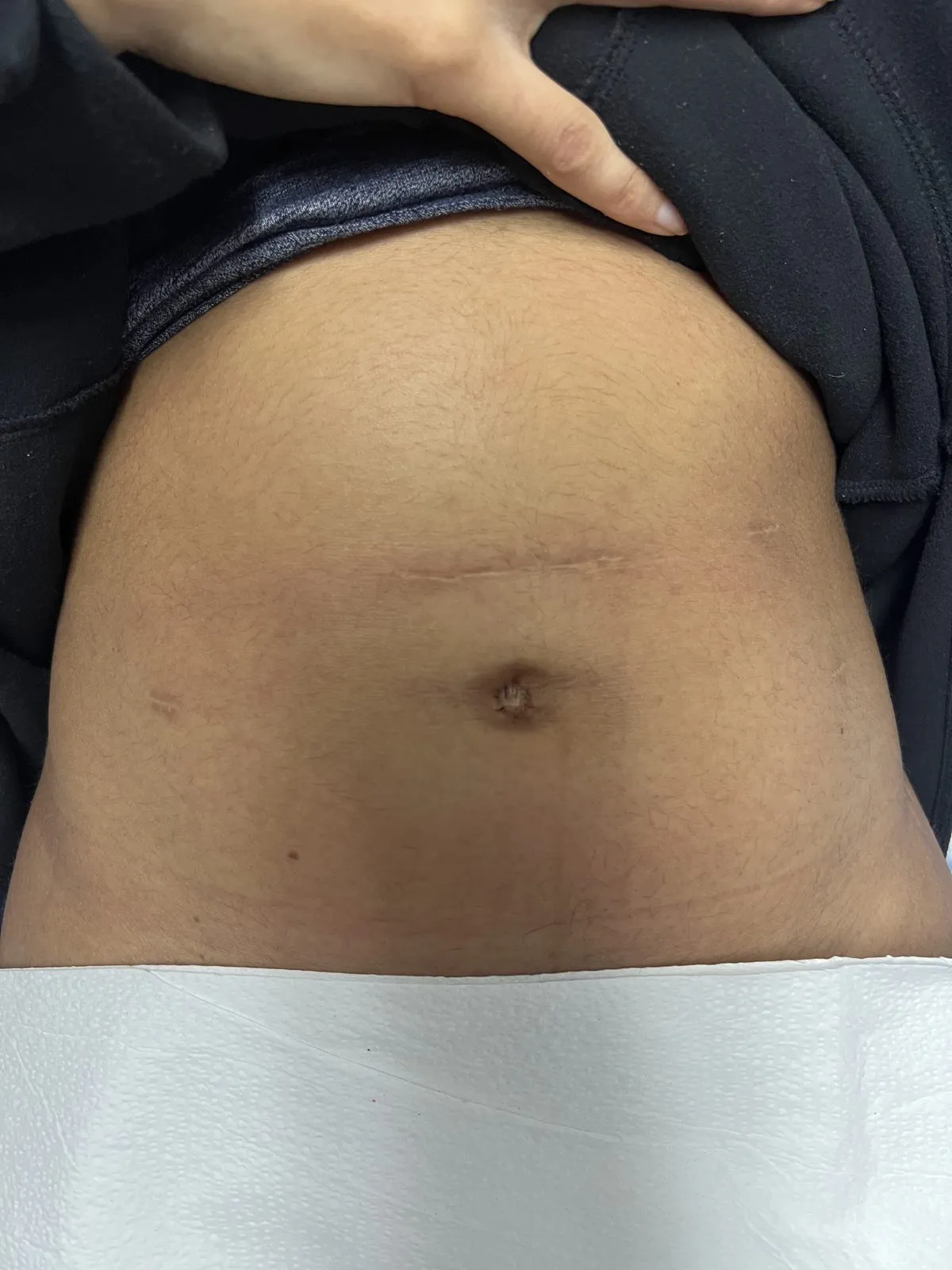
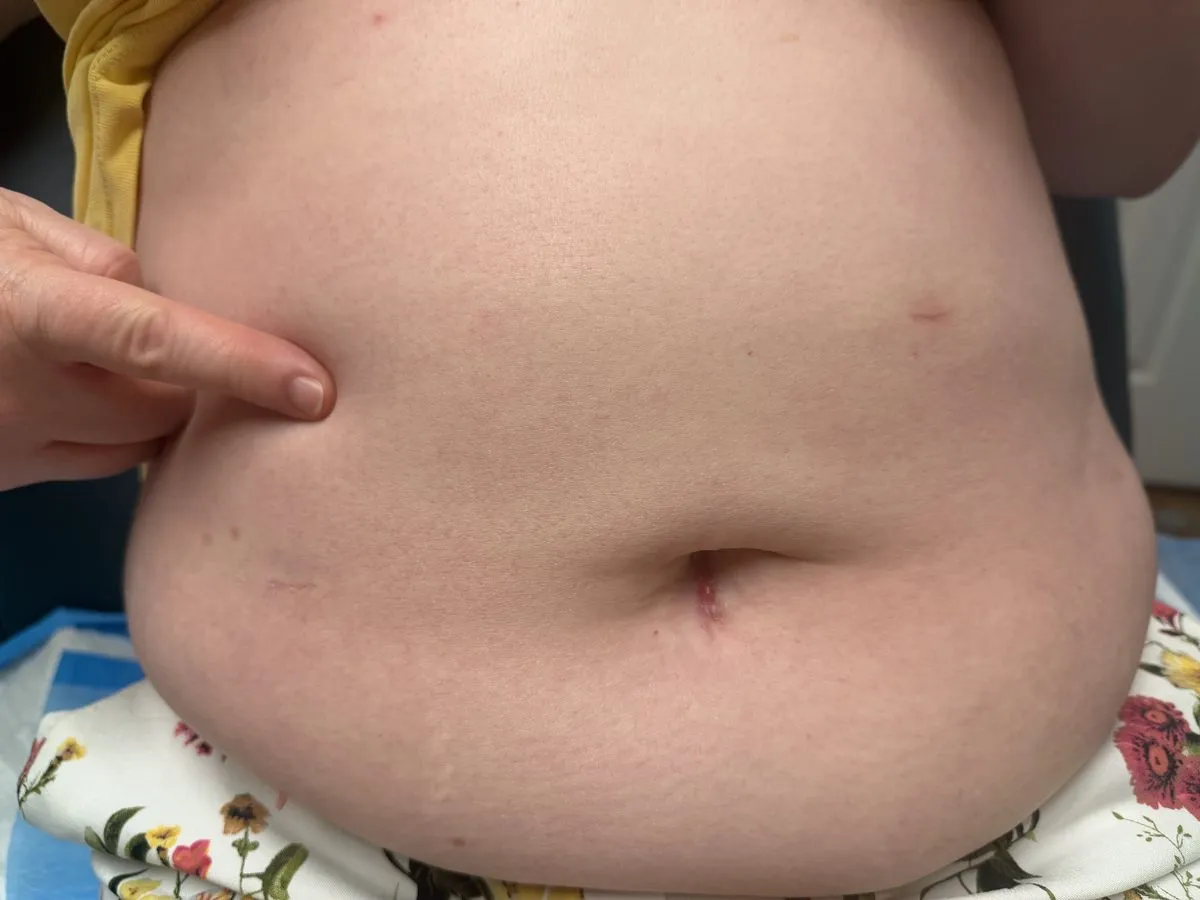
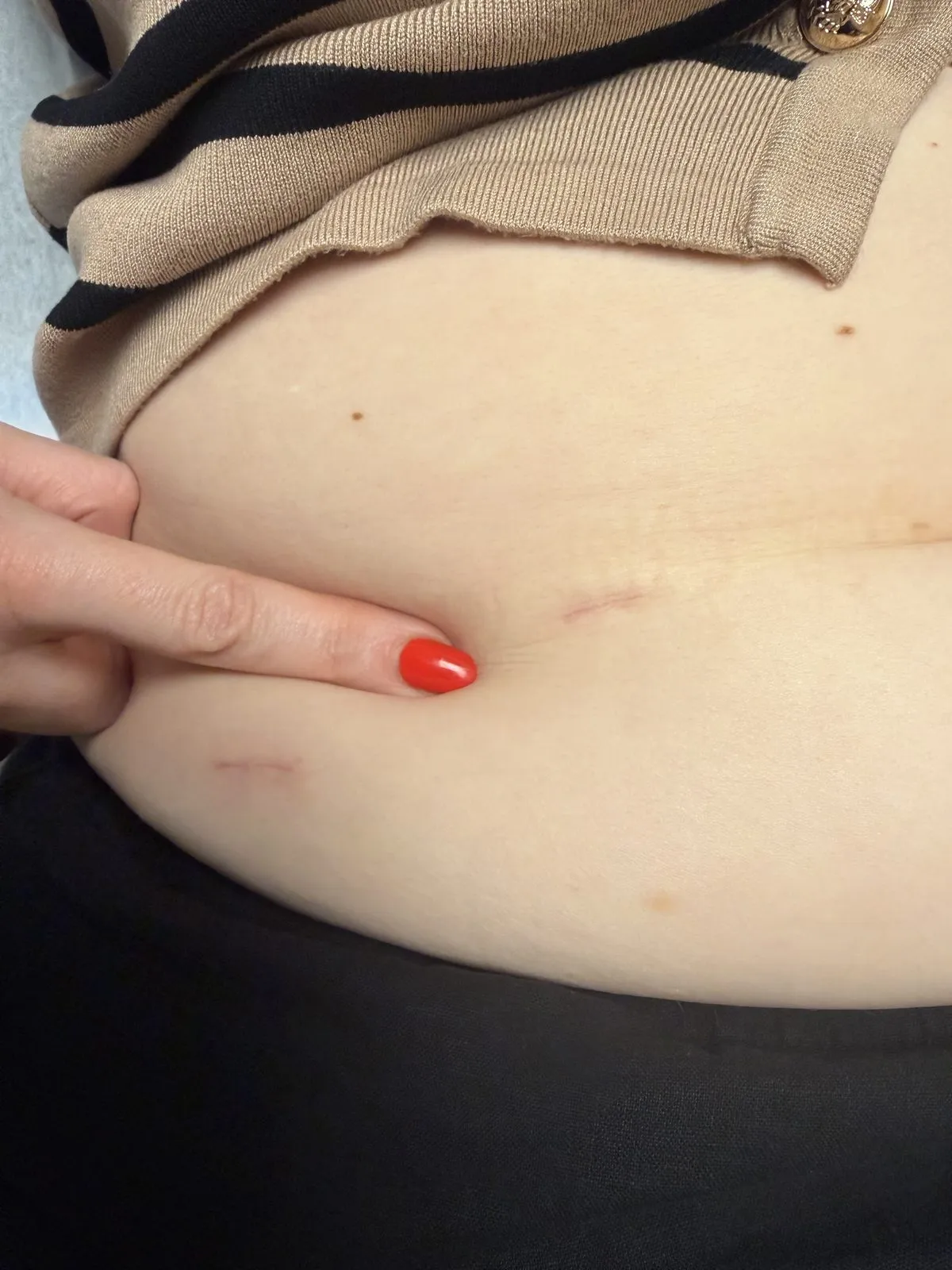
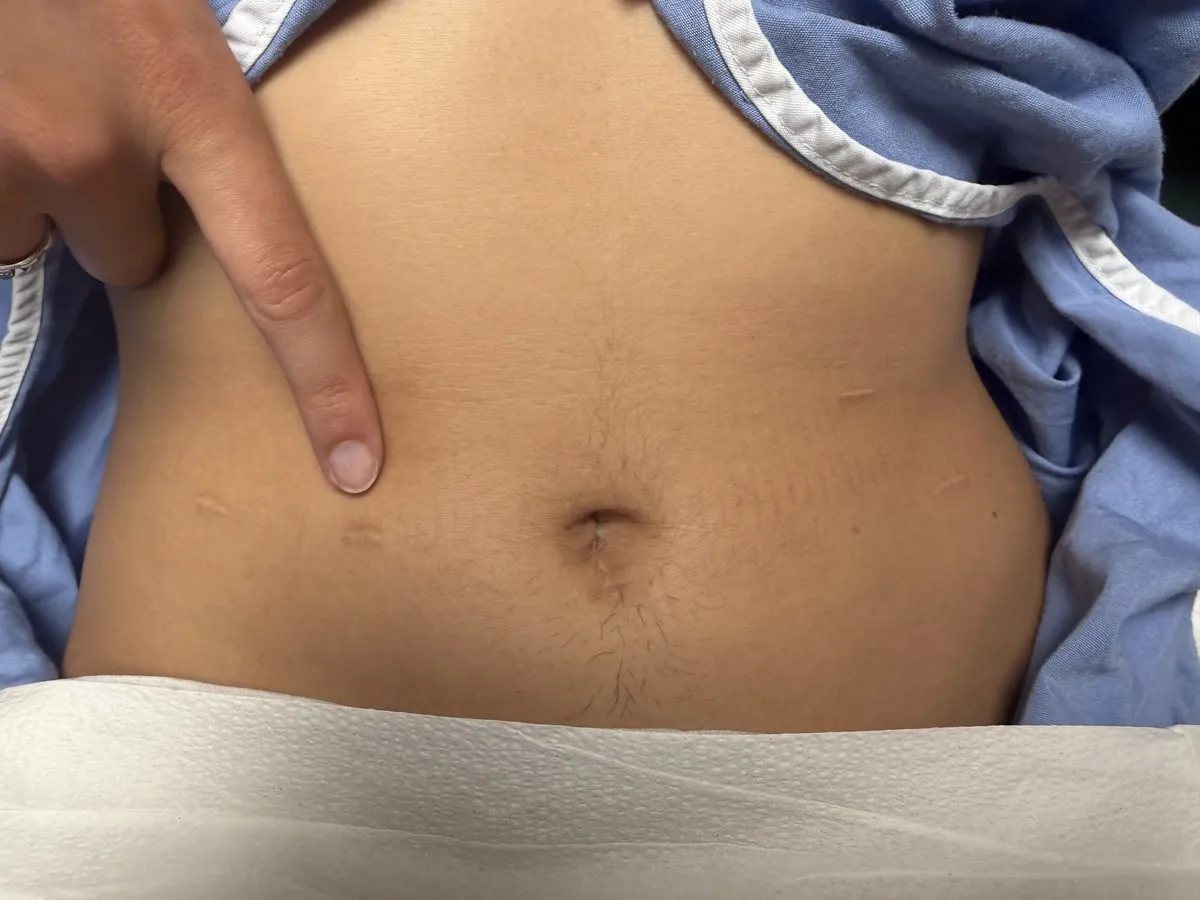
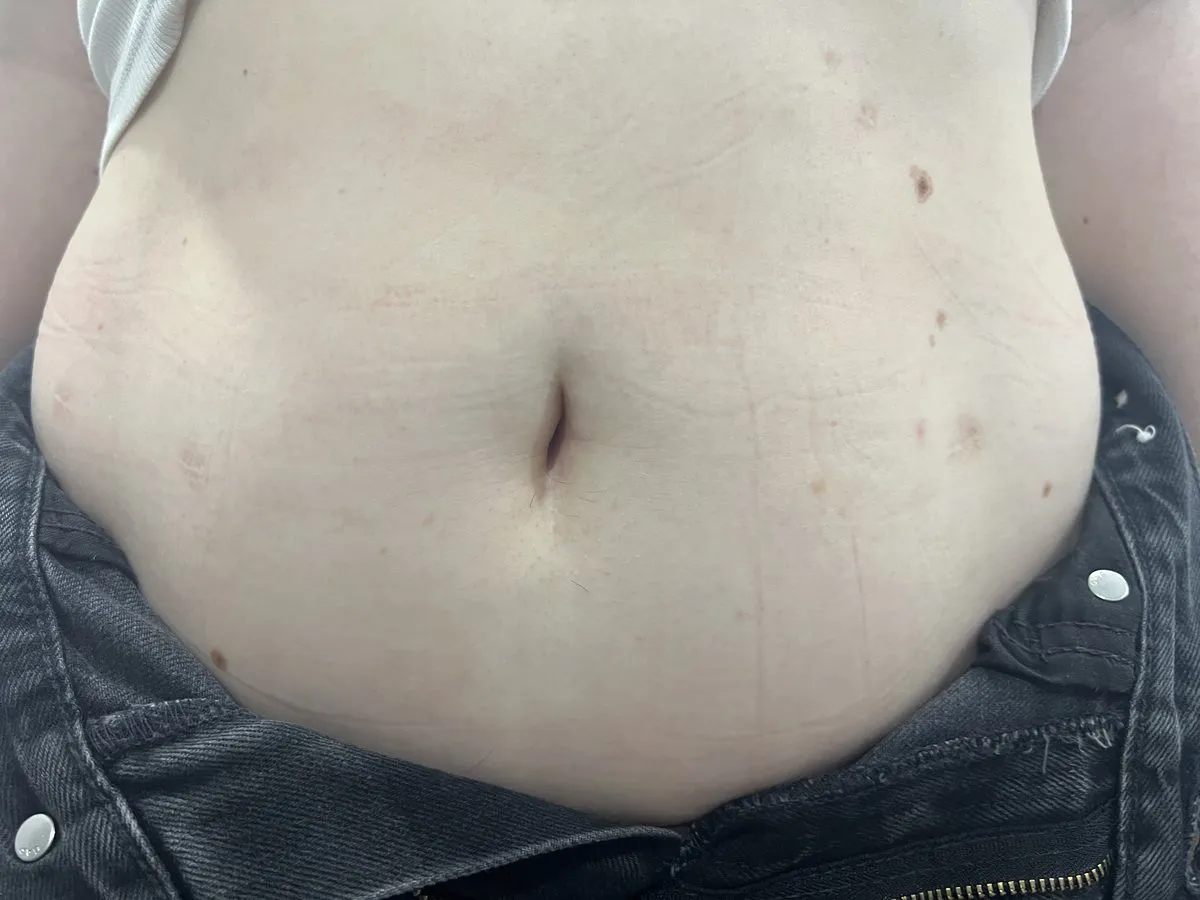
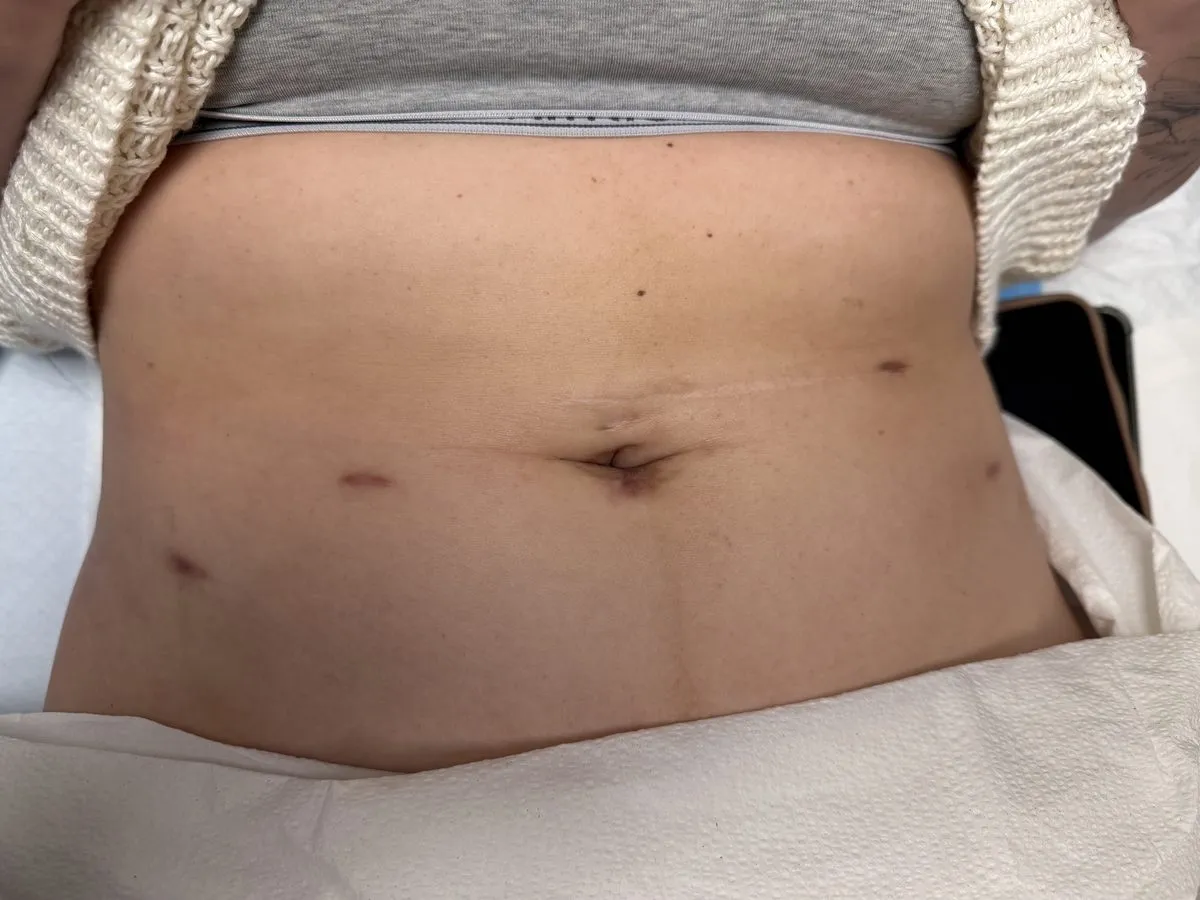
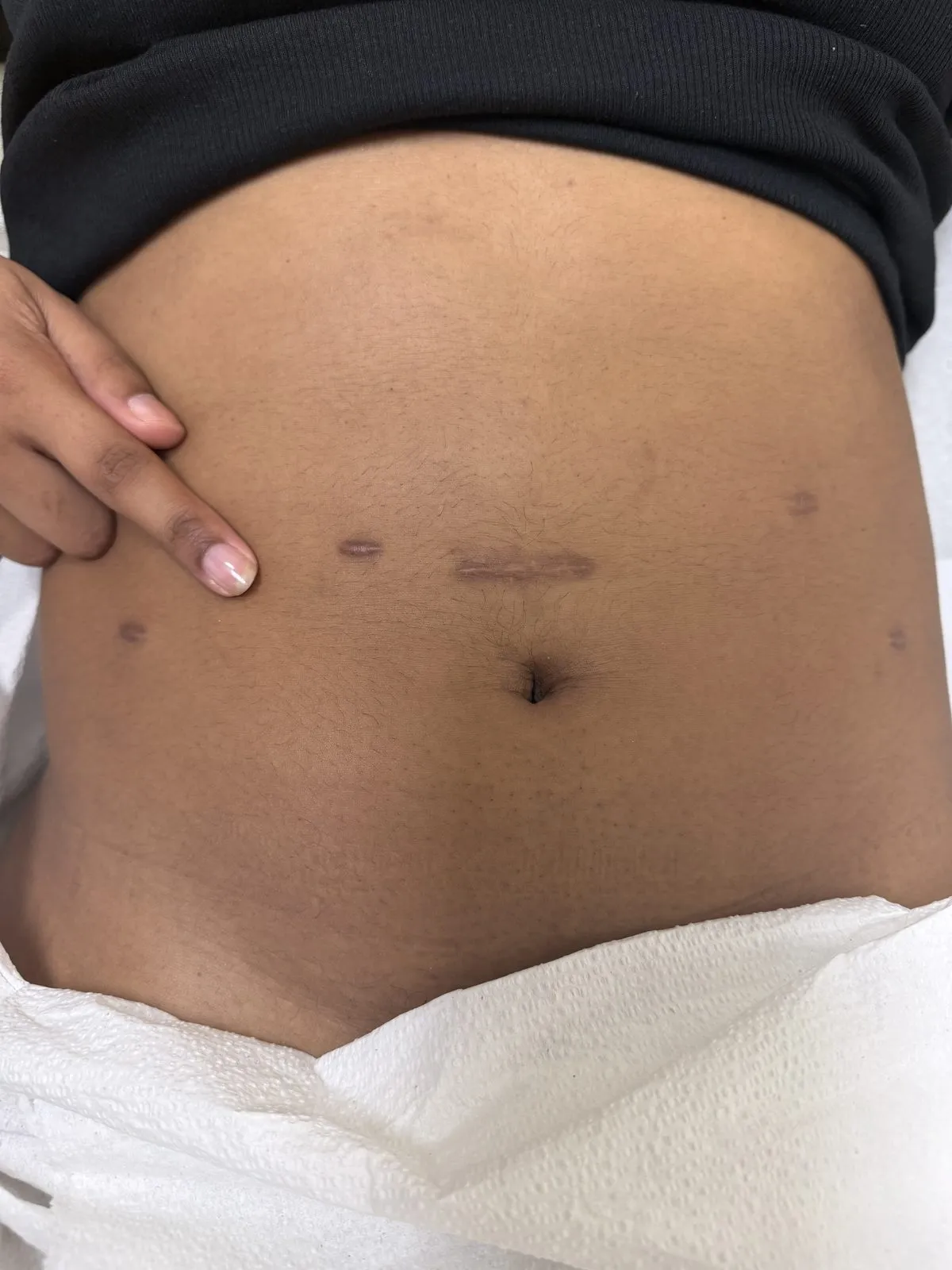
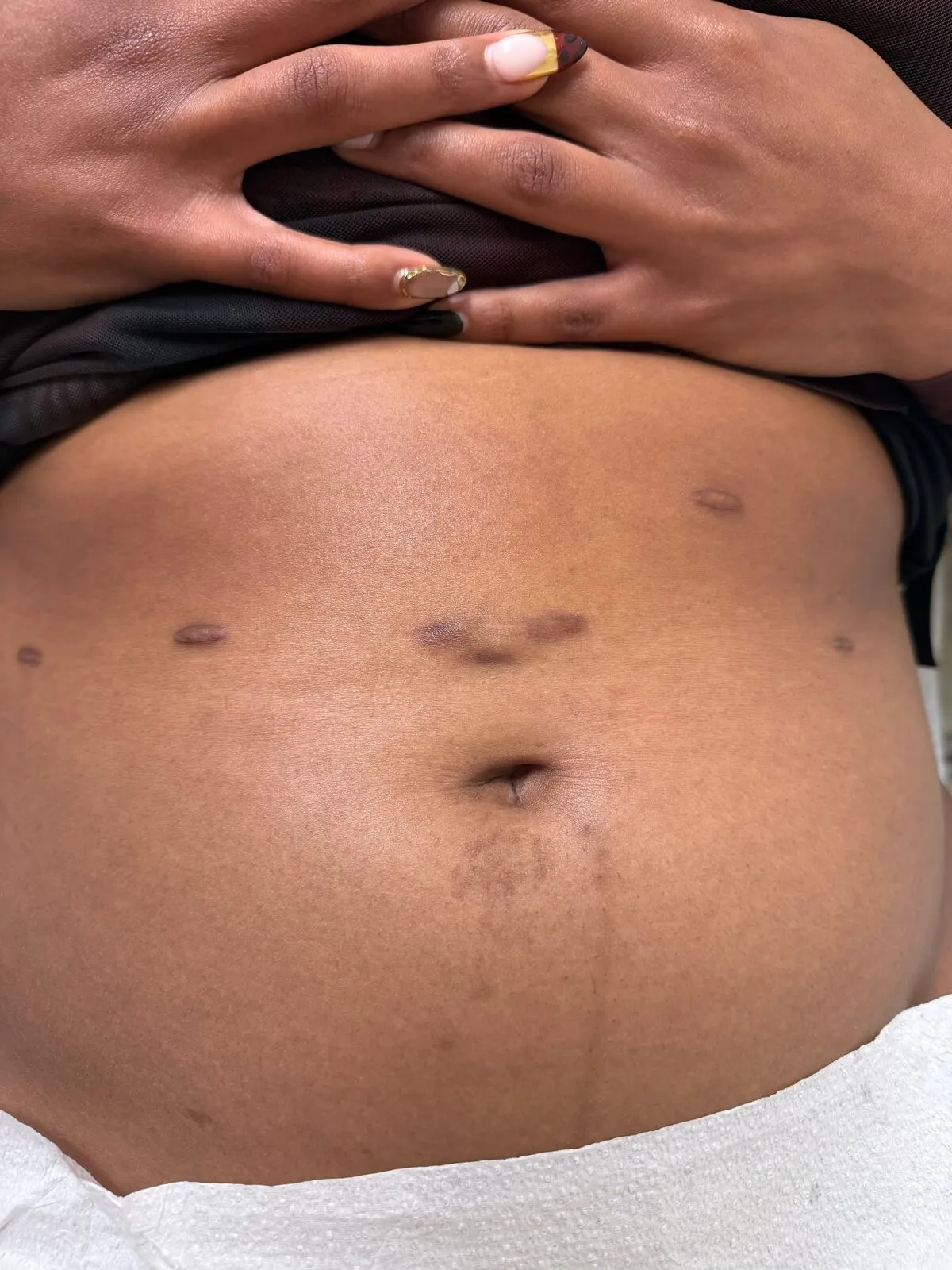
Individual healing results vary. These images are shared to illustrate a typical outcome, not to represent a guaranteed result for every patient.
Scar Care and Recovery at Dr. Kim's Upper East Side Practice
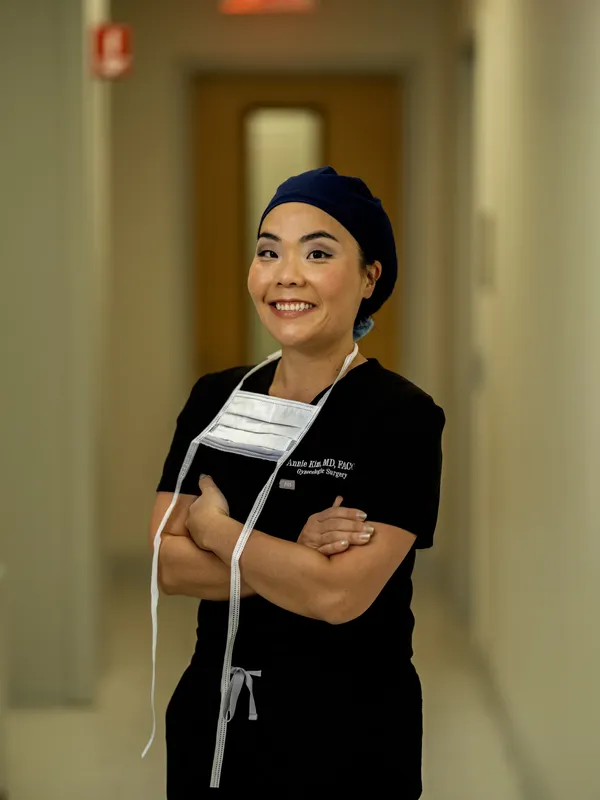
Dr. Annie Kim is a fellowship-trained, MIGS-only gynecologic surgeon practicing at 911 Park Ave. on the Upper East Side. Because her practice is dedicated entirely to minimally invasive gynecologic surgery, small-incision technique is not an occasional approach, it is the standard for every case, including complex ones. In one recent robotic-assisted laparoscopic myomectomy case study, Dr. Kim removed 11 fibroids weighing over 1,000 grams total through small laparoscopic incisions rather than a single large open incision, illustrating how much surgical complexity can be managed through keyhole access when a surgeon operates at high volume.
Every patient recovers a little differently, and factors like skin type, incision location, and personal scarring tendency all play a role in the final result. If you have questions about your own healing progress or scar appearance, the most reliable next step is to raise them directly with your surgical team rather than guessing from general information online.